

Behind the Scenes at Castle Roy
What it really takes to look after an 800-year-old fortress
Most people see Castle Roy as a romantic ruin in a beautiful Highland setting.
What they don’t see is the extraordinary amount of work, worry, planning, fundraising, maintenance, paperwork and community effort needed to keep a 12th-century masonry fortress standing, accessible and free for everyone to enjoy.
For us, that story really began in 1994.
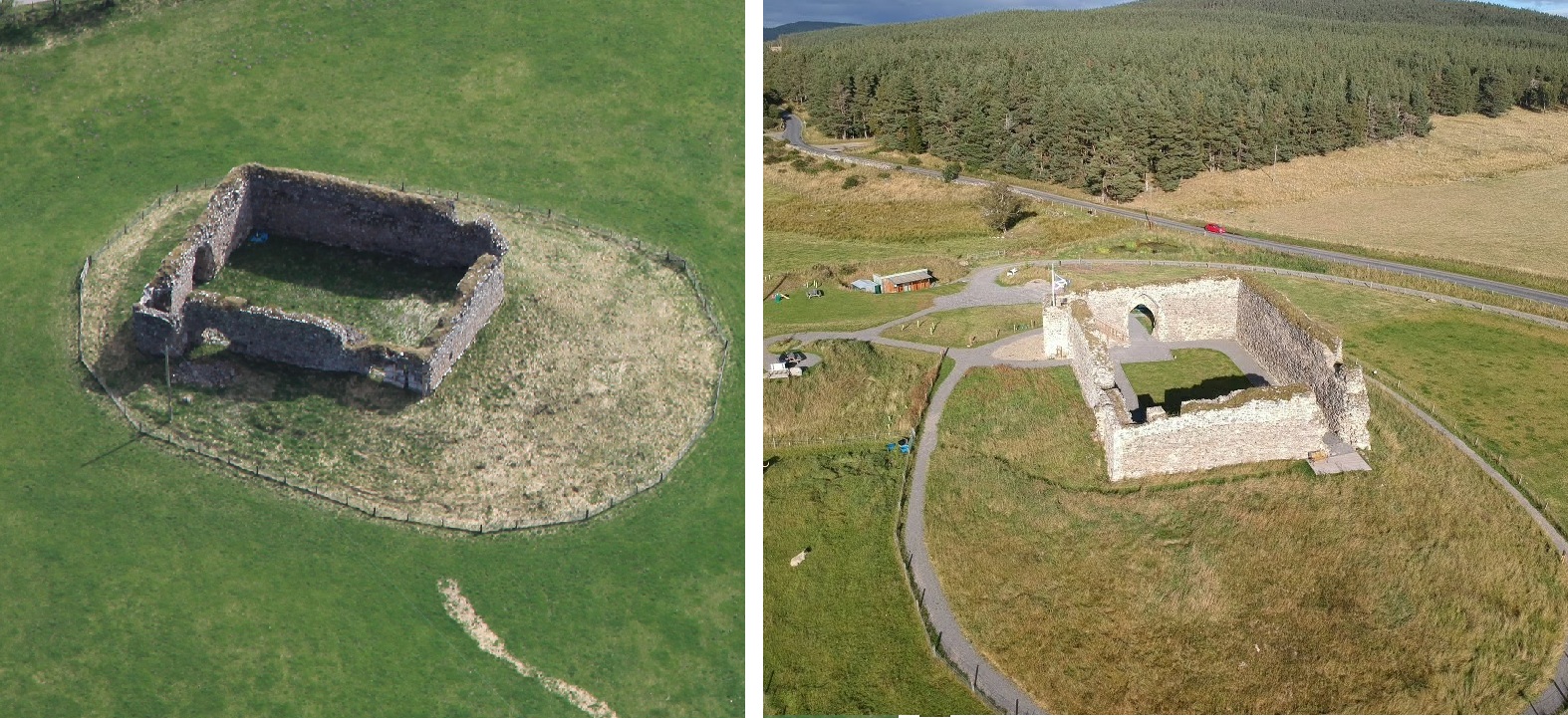
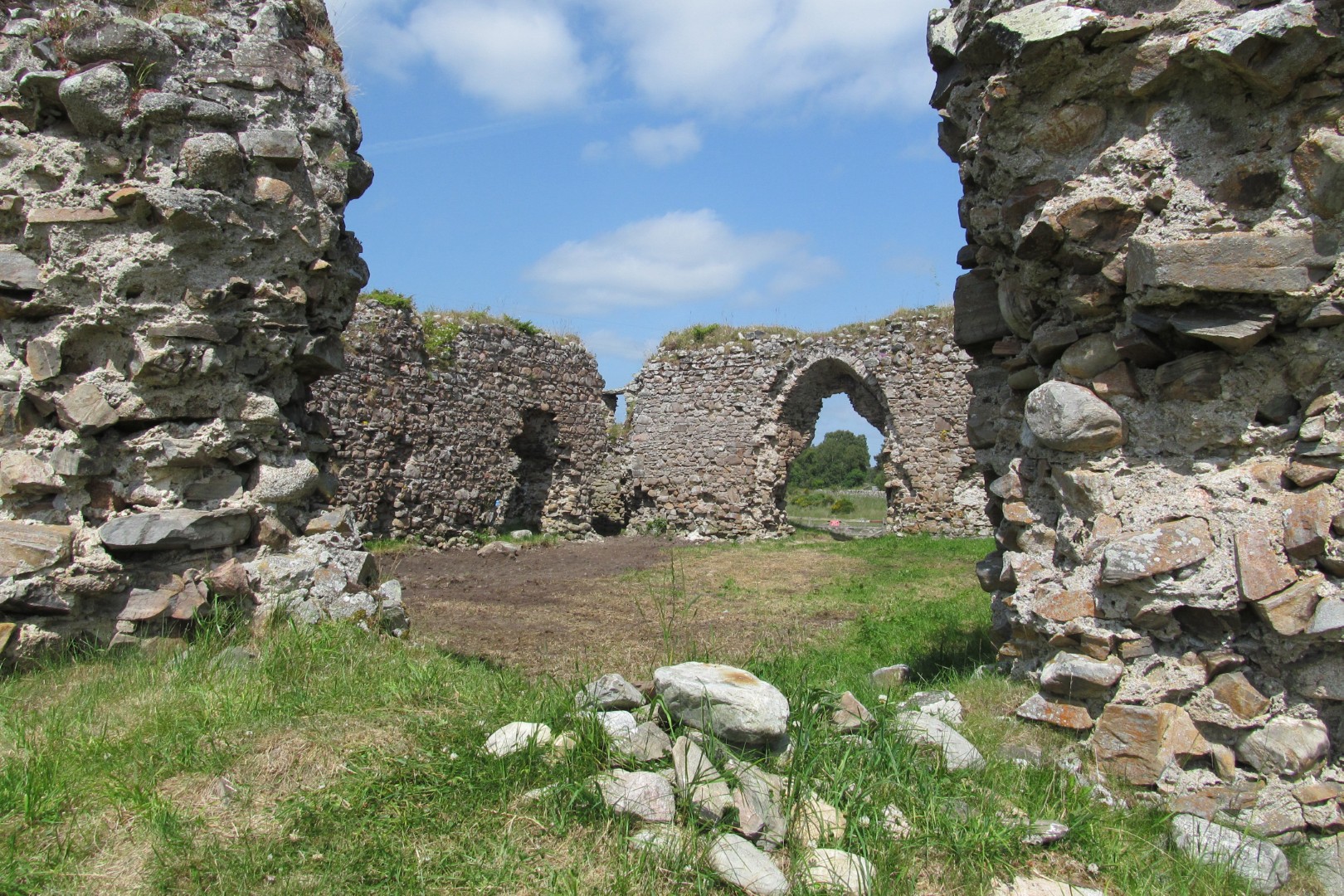
In 1994, standing with Stuart Black on the mound of this old and rather forgotten ruin, I asked him about its history.
He told me that he had clambered over it as a child, but very little was really known about it.
What was known was rather more alarming was that the walls were noticeably falling away.
That conversation began what became a very long voyage of discovery.

More than thirty years later, with an enormous amount of support from a great many people, Castle Roy is still standing, welcoming visitors and revealing more of its story.
And looking after it has turned out to involve rather more than repairing a few old walls!
So What Exactly Is Castle Roy?

Castle Roy is a 12th-century fortress, probably built by Clan Comyn, on a small glacial mound just north of the modern village of Nethy Bridge.
The castle has been carbon dated to between 1190–1220, giving us an extraordinary physical link back to the very beginning of its story.
In 1420, the area came under the stewardship of Clan Grant, the clan still strongly associated with this part of the Highlands today.


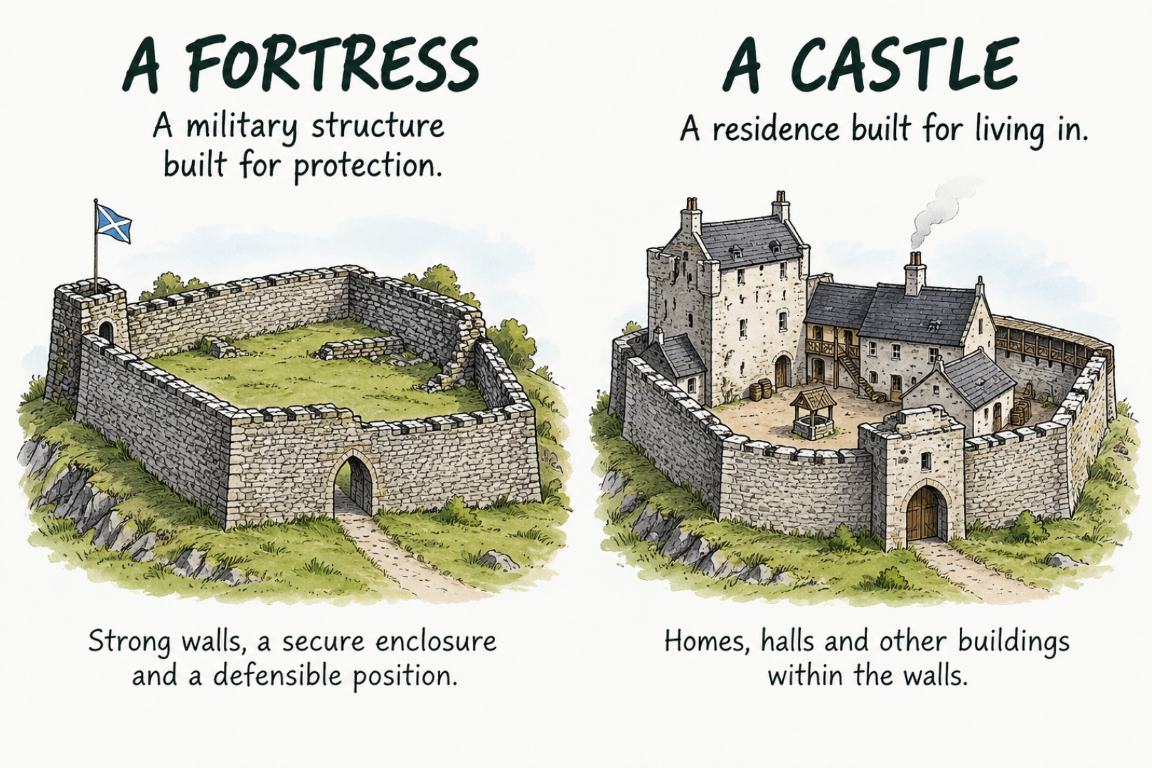
A fortress, rather than the castle you might expect
This is where the name Castle Roy can occasionally cause us problems.
People hear the word “castle” and sometimes arrive expecting turrets, great halls and something vaguely resembling Stirling Castle.
Castle Roy was different. It was a fortress, essentially a great stone enclosure used as an administrative centre. There would never have been a roof covering the whole structure.
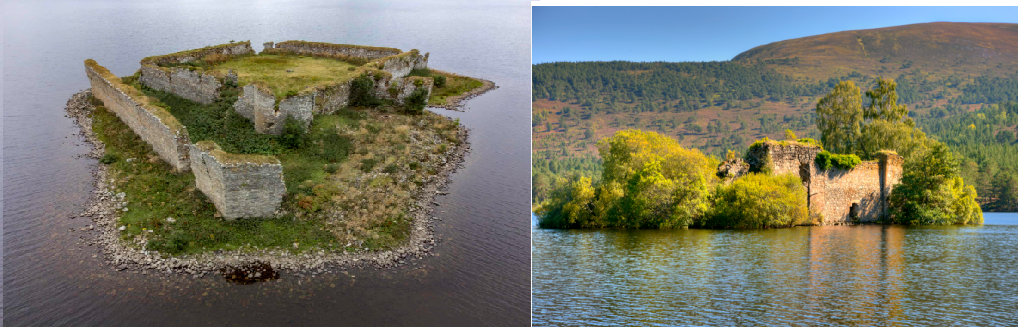
Occasionally that simplicity disappoints visitors who arrive without knowing what Castle Roy is.
But what looks deceptively simple is precisely what makes it so important. Castle Roy is one of the very few fortresses of its type in Scotland to have survived essentially unaltered and in such good condition.
It was declared a Scheduled Monument in the 1950s.
The history we have lost
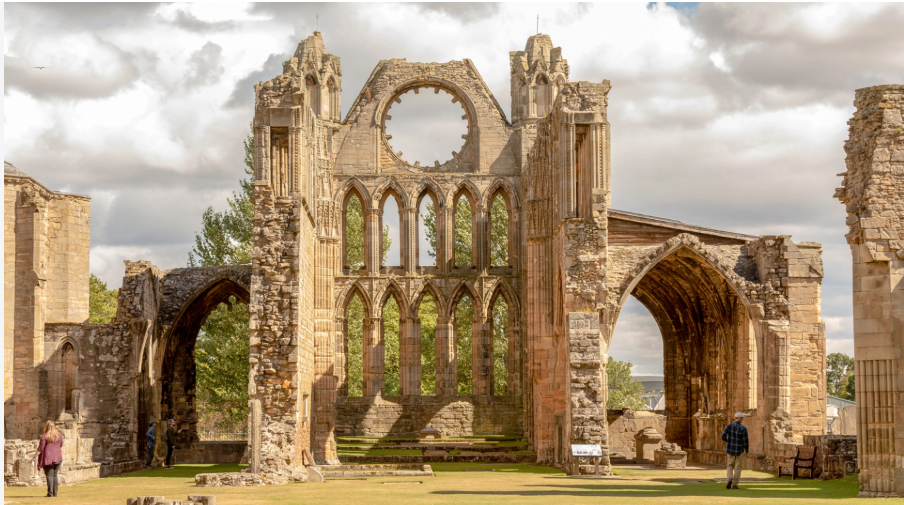

Unfortunately, much of the documentary history that might have told us more about Castle Roy has been lost.
The Wolf of Badenoch had a disagreement, to put it mildly, with the Bishop and burned Elgin Cathedral in 1390. Much of the historic record for this area was destroyed, leaving gaps in Castle Roy’s story that we may never be able to fill.
Fortunately, people continue to research it. Simon Forder, known as “The Castle Guy”, has very generously allowed us to use material from his book on our website for anyone who wants to delve more deeply into its history.
We are also members of the Scottish Castles Association, whose members visited in April 2022, shortly before our official opening.

But this is not really the story of the history you can read on an interpretation panel.
This is the story of what happens behind the scenes.
Because keeping Castle Roy standing is only the beginning.
Keeping an Ancient Monument Standing
Looking after Castle Roy has involved rather more than defending it from invading armies.
One of the earliest problems was cattle.


Cattle were rubbing against the walls and causing damage, while rabbits were busily undermining them from below.
With funding from Historic Scotland, rabbit-proof fencing was installed around the mound.
Then there was the lintel.
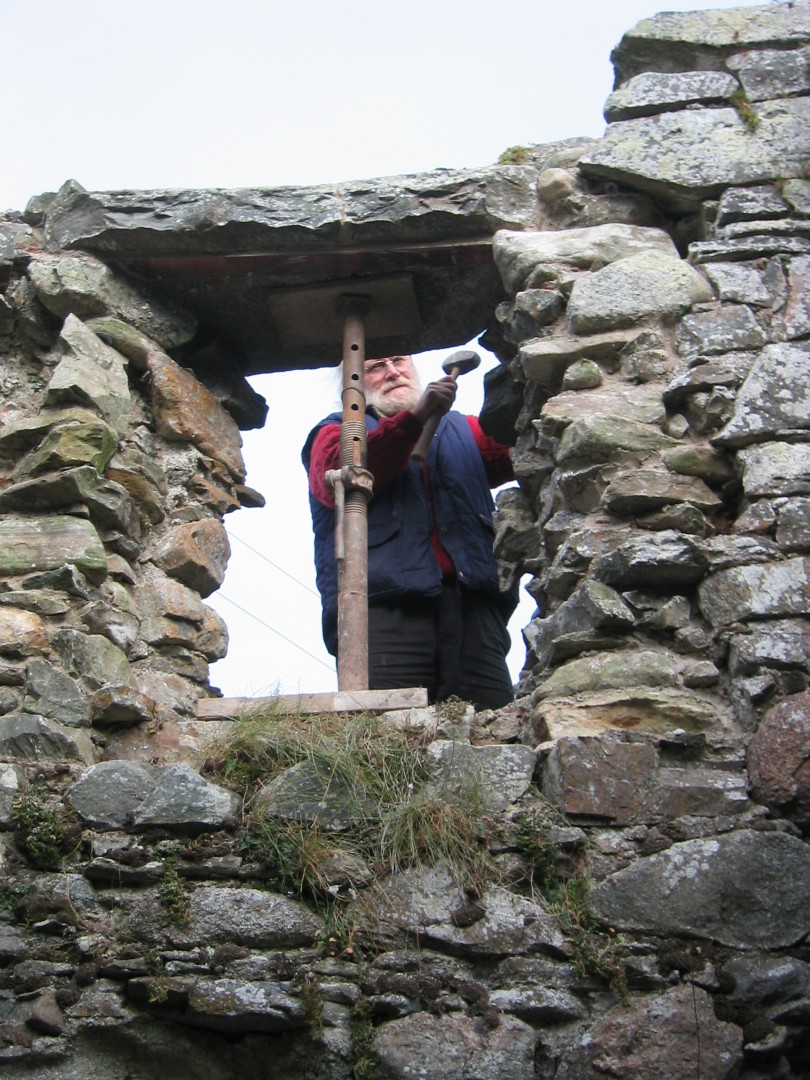
The only lintel was in such poor condition that, had it fallen, the whole section of tower could have been compromised. At one point it was estimated to have no more than about 15 years of life remaining.
Importantly, it also demonstrated the presence of a genuine window in the fortress.
These are the sorts of things that make looking after a Scheduled Monument rather different from maintaining an ordinary building.
You can’t just fetch a bag of cement

You cannot simply see a loose stone, fetch a bag of cement and put it back. Every intervention has to take account of the historic fabric of the monument.
And then, of course, there is the Highland weather.

When our first mason came on site in the autumn, he warned us that progress through the winter would inevitably depend on the weather. We prepared ourselves for weeks when work might simply have to stop.
In fact, that winter turned out to be remarkably mild and he lost only a few days altogether. For once, the Highland weather worked in our favour.
You can organise the funding, materials, equipment and people, but there is always one project partner over which you have absolutely no control: the weather.
Sometimes the plants are protecting the castle
Even the vegetation growing on the walls is more complicated than it appears. Every few years volunteers remove young saplings whose roots could eventually damage the mortar and loosen the stonework. But other vegetation is deliberately left in place.


Our latest five-year masonry inspection, carried out in August, demonstrated why. Wall-heads covered by thick vegetation were generally well protected, while some areas of bare masonry were suffering.
The inspection also identified movement beside the main doorway which needs monitoring, particularly through the winter when frost can penetrate the crack. There are other areas where pointing and pinning will be needed, and some of the mortar repairs within the tower are beginning to deteriorate.
But the important news was reassuring: the castle was in a safe condition when the inspection was completed, and most of the previous consolidation work was holding up well.
“The tower masonry internally doesn’t seem to be awful.”
— Hamish, our stonemason
We took that as good news.
A 12th-century fortress does not understand the concept of “finished”. There will always be another winter, another frost, another crack to monitor, another plant growing somewhere it shouldn’t and, inevitably, another bill!

Our job is not to make Castle Roy new again. It is to preserve what has survived, intervene where necessary and make sure the fortress is still here for the generations who come after us.
Passing On the Skills
One of the less visible benefits of the conservation work at Castle Roy has been the opportunity to pass traditional skills on to another generation.
We have trained a young, local mason in working with lime mortar, which is essential when dealing appropriately with historic masonry.


More recently, we have also put him through the necessary training to use the cherry picker required to reach the higher parts of the walls safely.
So the money raised for conservation isn’t simply being spent on Castle Roy. Some of it is helping a local tradesman acquire specialist skills and qualifications that can be used on other historic buildings in the future.
Also, we have also welcomed apprentices from Inverness.

For somebody learning a traditional trade, there is an enormous difference between being told about historic masonry in a classroom and standing in front of walls that have survived for more than eight centuries.
And education isn’t restricted to the trades.

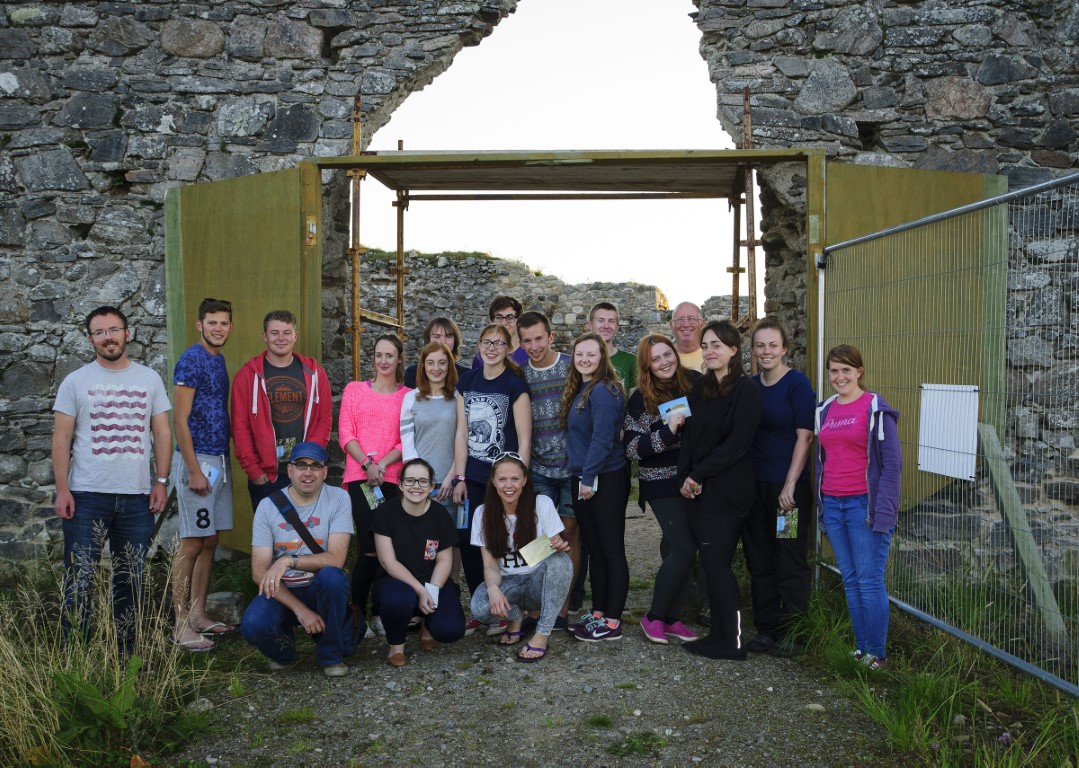
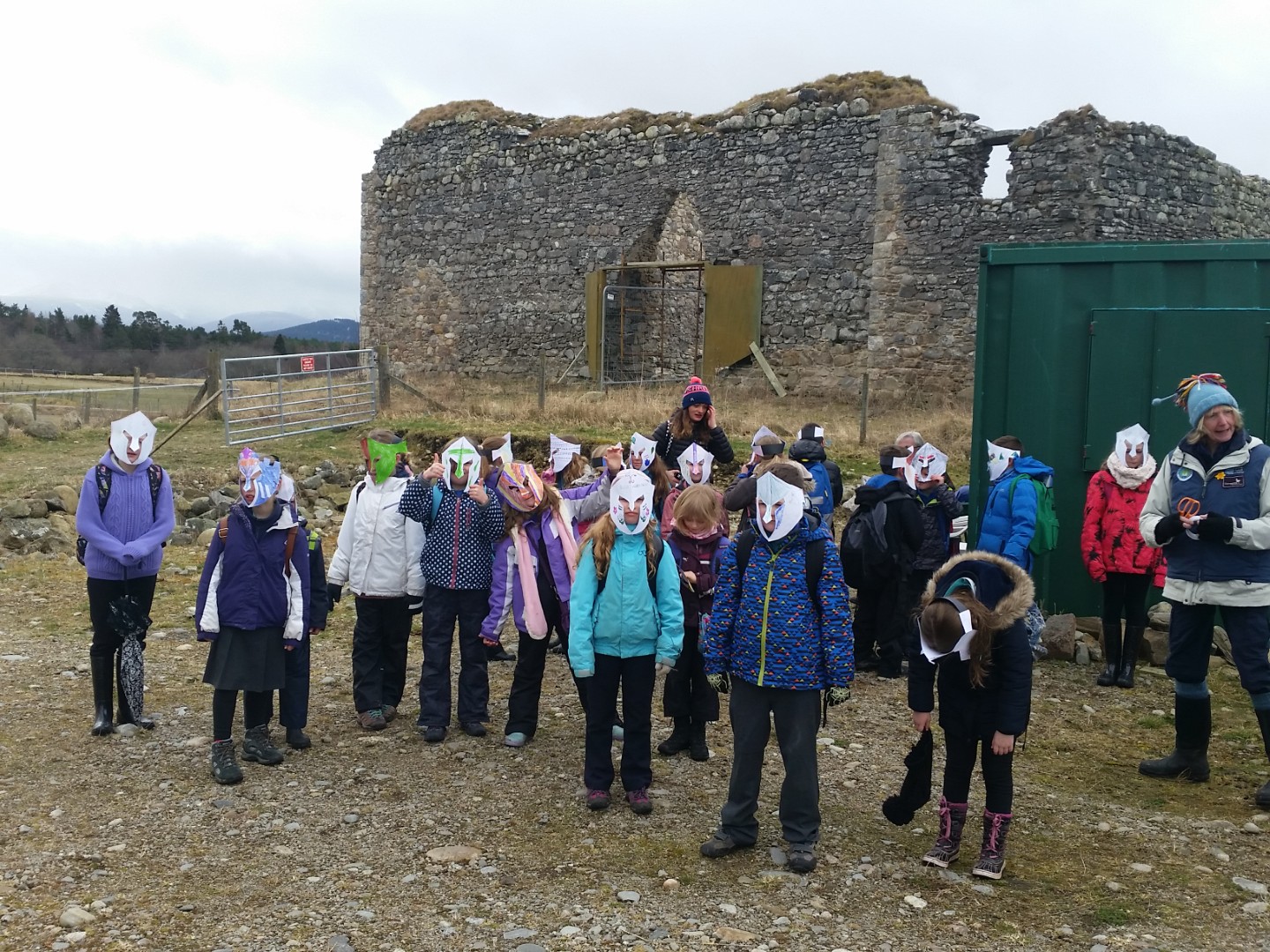
Primary and secondary school visits give local children the opportunity to discover the history of this remarkable building almost on their doorstep. Castle Roy has even become a university field-trip destination, with students from Worcester University visiting as part of their studies.
Castle Roy is teaching people again.
That is something Stuart Black and I could hardly have imagined when we stood on that neglected mound back in 1994.
Opening Castle Roy to Everybody
From the outset, we were determined that Castle Roy should be accessible to as many people as possible.

Disabled parking is provided in the upper car park so that visitors with mobility difficulties can get much closer to the castle and the whole site is linked by wheelchair friendly paths. Only the tower itself is inaccessible.
That sounds straightforward… when you say it quickly.


At a Scheduled Monument, every improvement requires careful thought and the appropriate permissions.
There is always a balance to strike: we want people to experience and enjoy Castle Roy without damaging the very thing they have come to see.
Helping Visitors Understand What They See
Our interpretation has developed gradually over the years.

The original panels were produced long before the official opening and gave visitors basic information about the castle as we understood it then.
In 2022 they were joined by artists’ impressions showing what life within these walls might once have looked like.

These have proved extremely popular and are regularly photographed by visitors.
More recently, with help from the Cairngorms Trust, we added interpretation about the flora and fauna around Castle Roy.


Specialist local groups and individuals helped provide the information, and the new panels were completed in 2025.
We regularly see people stopping to photograph them, which is a rather satisfying indication that somebody is actually reading the information we spent so long producing.
More Than Just the Castle

From quite early on, we realised that Castle Roy could be more than the masonry itself.
Speyside Fields for Wildlife have been wonderful in helping us create wildflower areas around the site.
Of course, success brings its own problems. The better the wildflowers look, the more tempting they become to photographers searching for the perfect selfie.
Unfortunately, the next visitor then gets a wonderful photograph of a flattened wildflower area.

The Badenoch & Strathspey Conservation Group has also been extremely helpful, carrying out wildlife surveys over the years and giving us advice.

And tiny Alpine strawberries grow amongst the rocks outside the office. They are particularly popular with children, so whenever anyone gives us runners, that is where they go.
The Wetland Wander
Years ago, part of our LEADER funding was intended to create a wetland area.

We thought this would be easy because the neighbouring field was prone to flooding.
It wasn’t.
We dug a pond.
It drained.
We discovered that creating a wetland where nature apparently did not particularly want one was going to require rather more effort.

My 60th birthday present was therefore a huge pond liner.
Not everybody gets one of those.
The newly dug pond was lined while a second area was then created to cope with the flooding. Many plants, supplied by Speyside Fields for Wildlife, have developed into what is now our Wetland Wander.

And then there were the ducks…
We thought it would be nice to encourage ducks, so two decoy ducks were tied into the pond.

One day Annabelle was explaining to a Dutch visitor that the ducks were actually plastic. The woman looked towards the pond and exclaimed:
“LOOK! They’re really realistic. That one is actually flapping its wings and taking off!”
Annabelle was somewhat astonished.

Eventually, however, we had succeeded. Real ducks discovered the pond.
Unfortunately, so did the local buzzards.
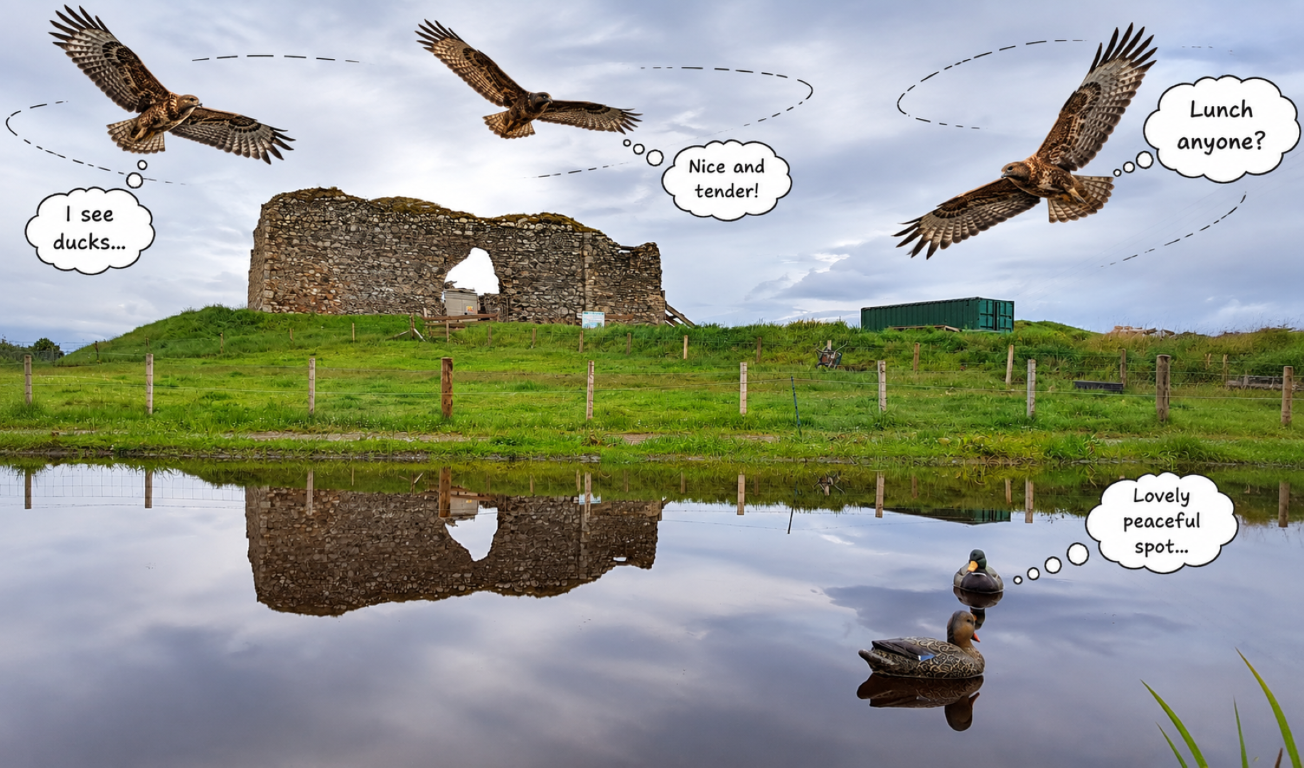
It turned out that while we regarded the Wetland Wander as a wildlife habitat, the buzzards regarded it more as a takeaway.
Nobody mentioned that possibility in the funding application.
The Things Visitors Never See
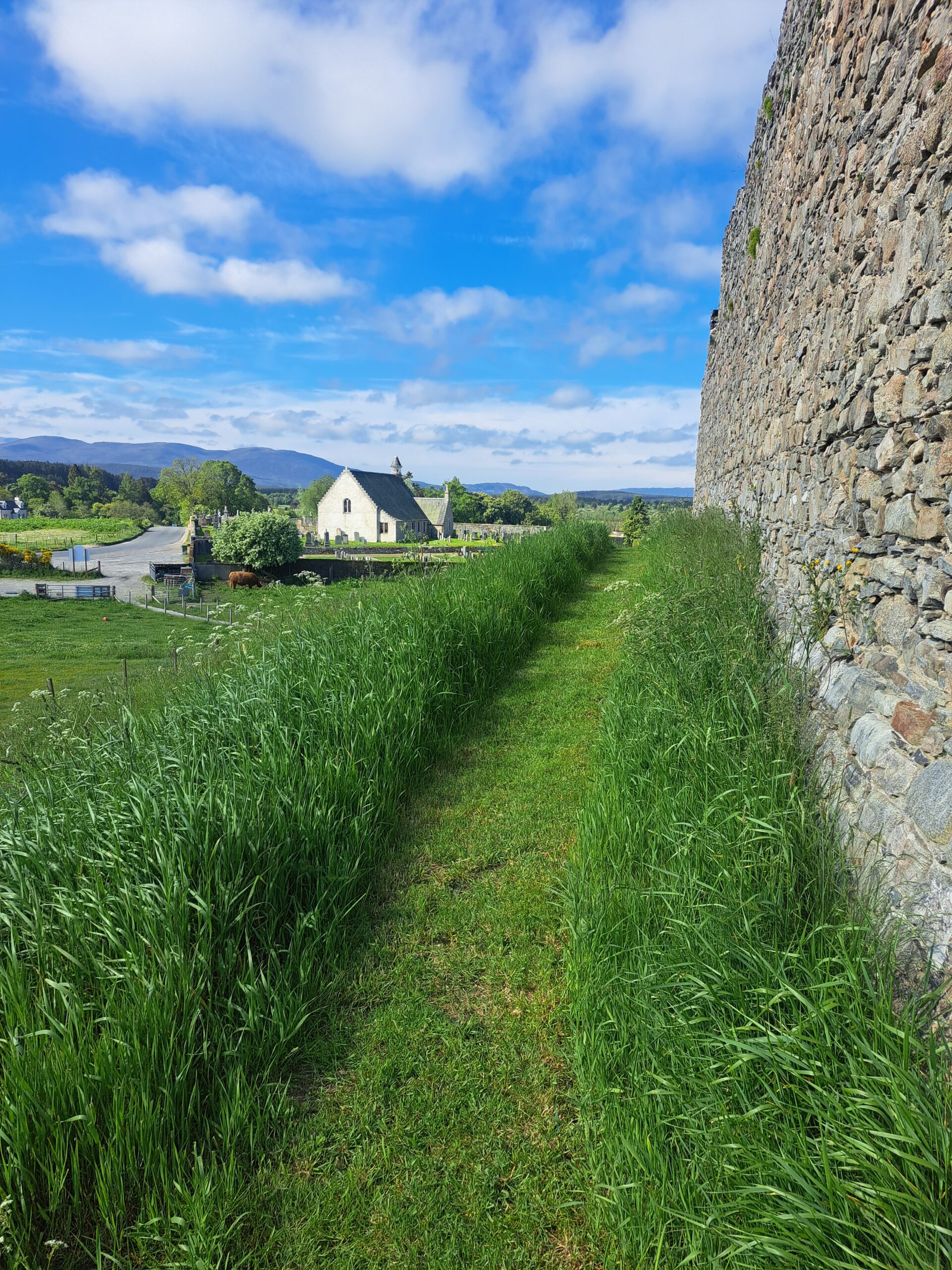


Looking after Castle Roy is not simply conservation.
There is grass to cut and paths to maintain. Equipment to look after. Signs to make. Visitors to help. Funding applications to complete, accounts to keep and insurance to arrange.
And there is a seemingly endless supply of small problems that nobody thinks about until they occur.
With help from the Cairngorms Trust, we have been able to buy garden machinery capable of tackling the numerous paths, livestock fields and grassed areas. That has made an enormous difference.
We are also fortunate that a nearby farmer provides us with sheep. They are very good for the mound and for managing the wildflower meadows.
Naturally, sheep bring their own problems. People let dogs off leads. People leave gates open. So we make yet another sign.
There appears to be no upper limit to the number of obvious things for which you eventually discover you need a sign.
And Then There Are the Visitors
We now have a people counter, bought as part of our funding, which has finally given us much more accurate visitor figures.
For a brief moment, we might have thought Castle Roy had suddenly overtaken Edinburgh Castle.
It hadn’t.
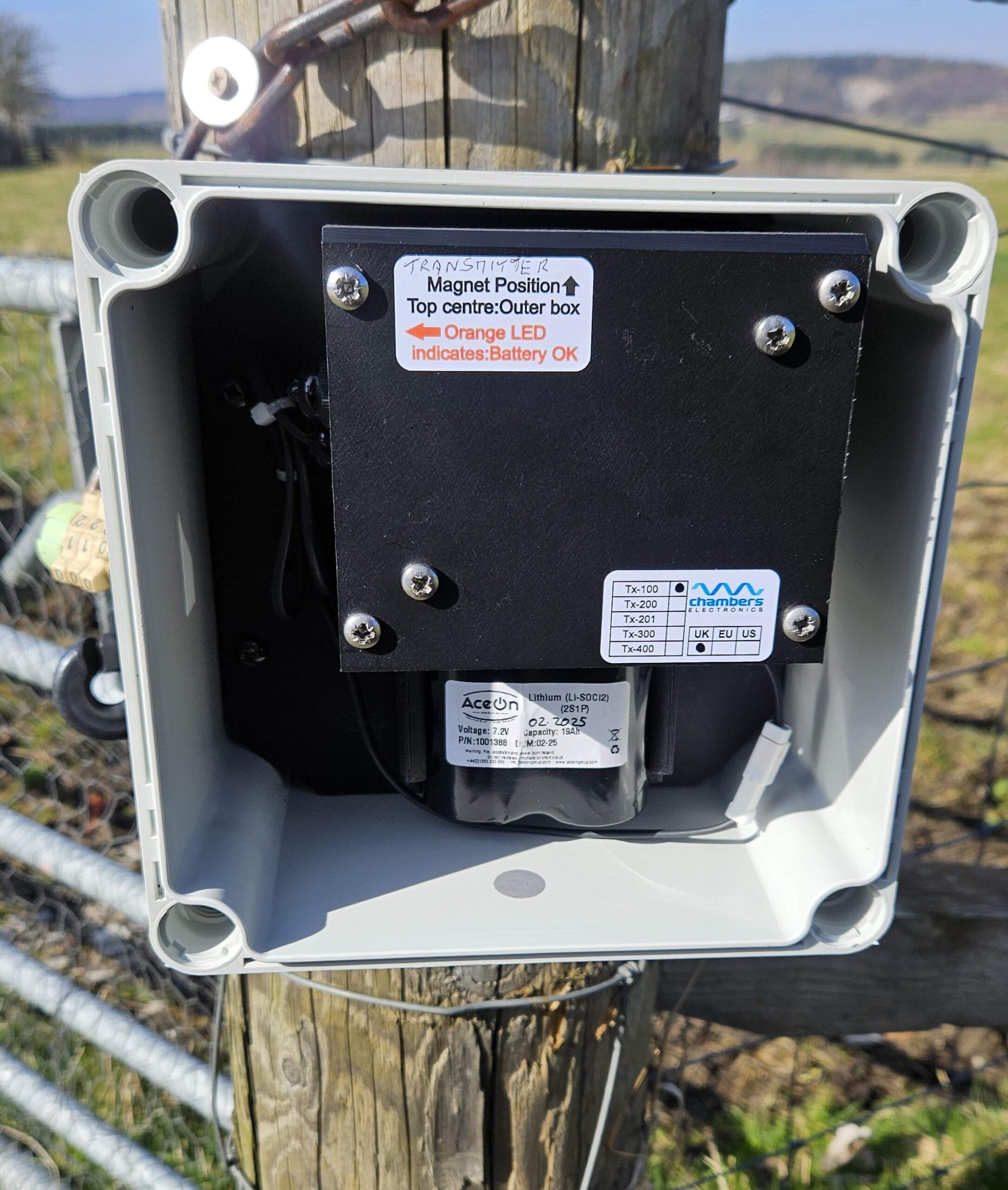
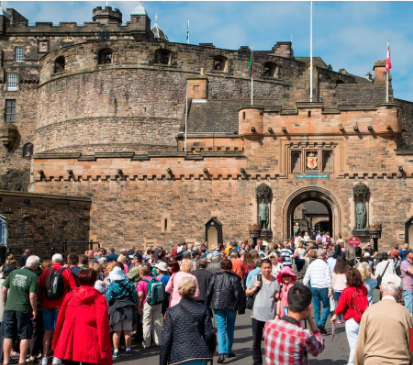
Long grass was waving across the counter. Every time it moved, it was apparently another visitor.

June has therefore been quietly removed from the statistics, and cutting the grass around the people counter has joined that ever-growing list of little jobs somebody has to remember.
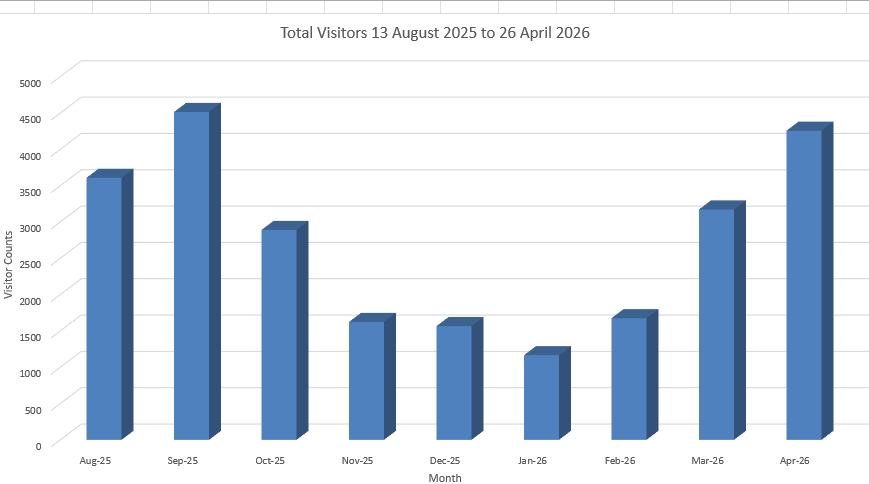
Ignoring our 80,000 blades of grass, the average in 2026 has been more than 2,000 visitors a month, rising above 4,000 during holiday months.
If only every one of them gave us a pound…
Paying for It All
Castle Roy is free to visit. But Castle Roy is certainly not free to run.

And that does not include the unexpected.
Visitors can also understandably be confused by the Historic Environment Scotland sign on the site. Because Historic Environment Scotland provided funding, we are required to display their sign for ten years. Visitors therefore sometimes assume Castle Roy is a Historic Scotland property.
It isn’t.
Castle Roy does not have Historic Scotland helping with its running costs. We rely on donations.
The Cairngorms Trust has been extremely helpful with particular projects, for which we are enormously grateful, but project grants represent only part of the cost of running the site and often require the Trust itself to contribute a percentage.
So fundraising never really stops.
Fundraising comes in many forms


We have organised coffee mornings and other local fundraising activities, where community support has been enormously important.
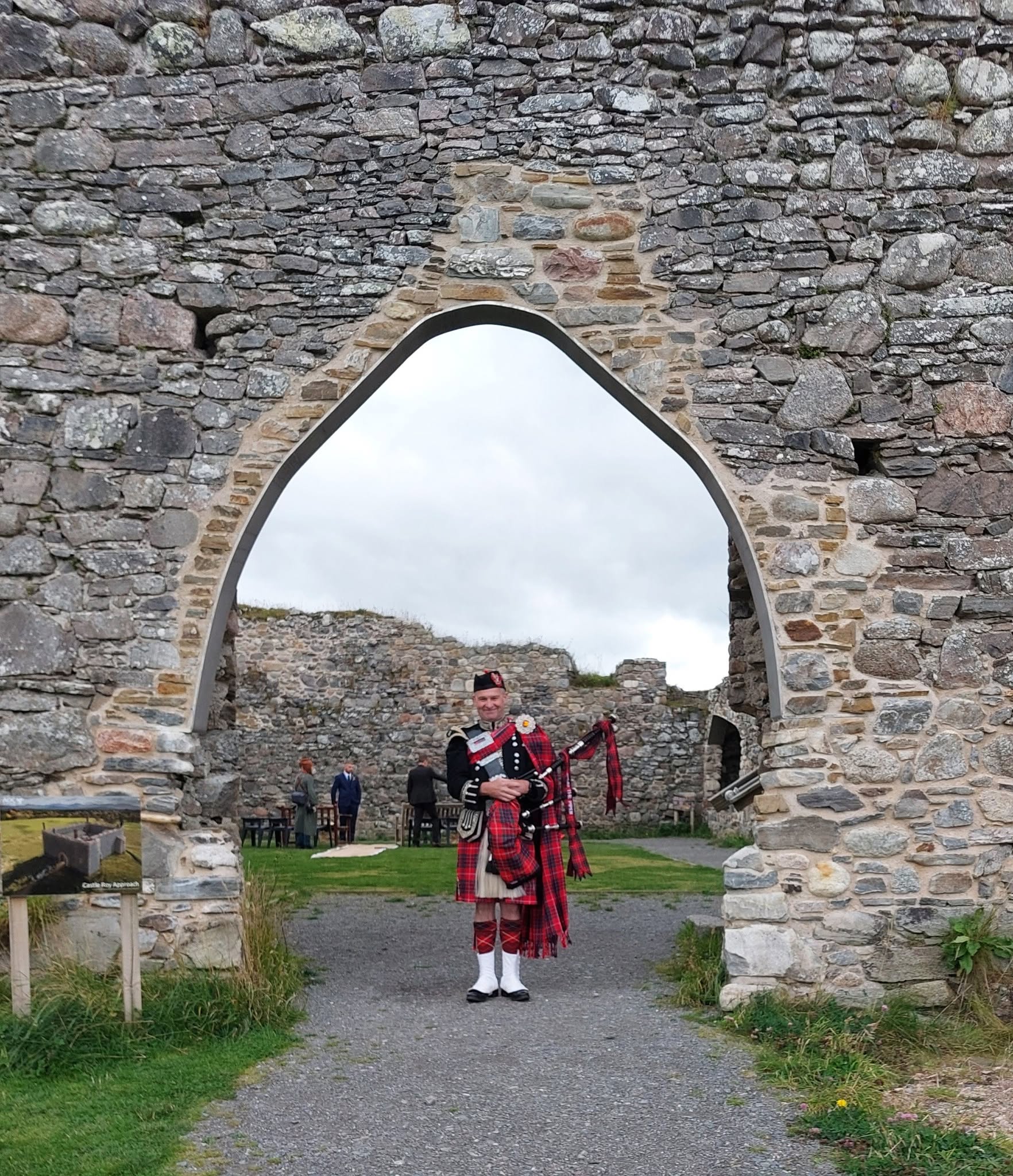
We have attended wedding fairs to promote Castle Roy as a rather different place to get married.
And we have had a secret weapon: Spud the Piper, who was persuaded to pose at our stall to attract a little more attention.
It is perhaps not the sort of thing people imagine when they think about conserving a Scheduled Monument. But that is exactly the point.
Behind the scenes, you do whatever you can to keep the place going.
Pounds, QR codes and Motorhomes

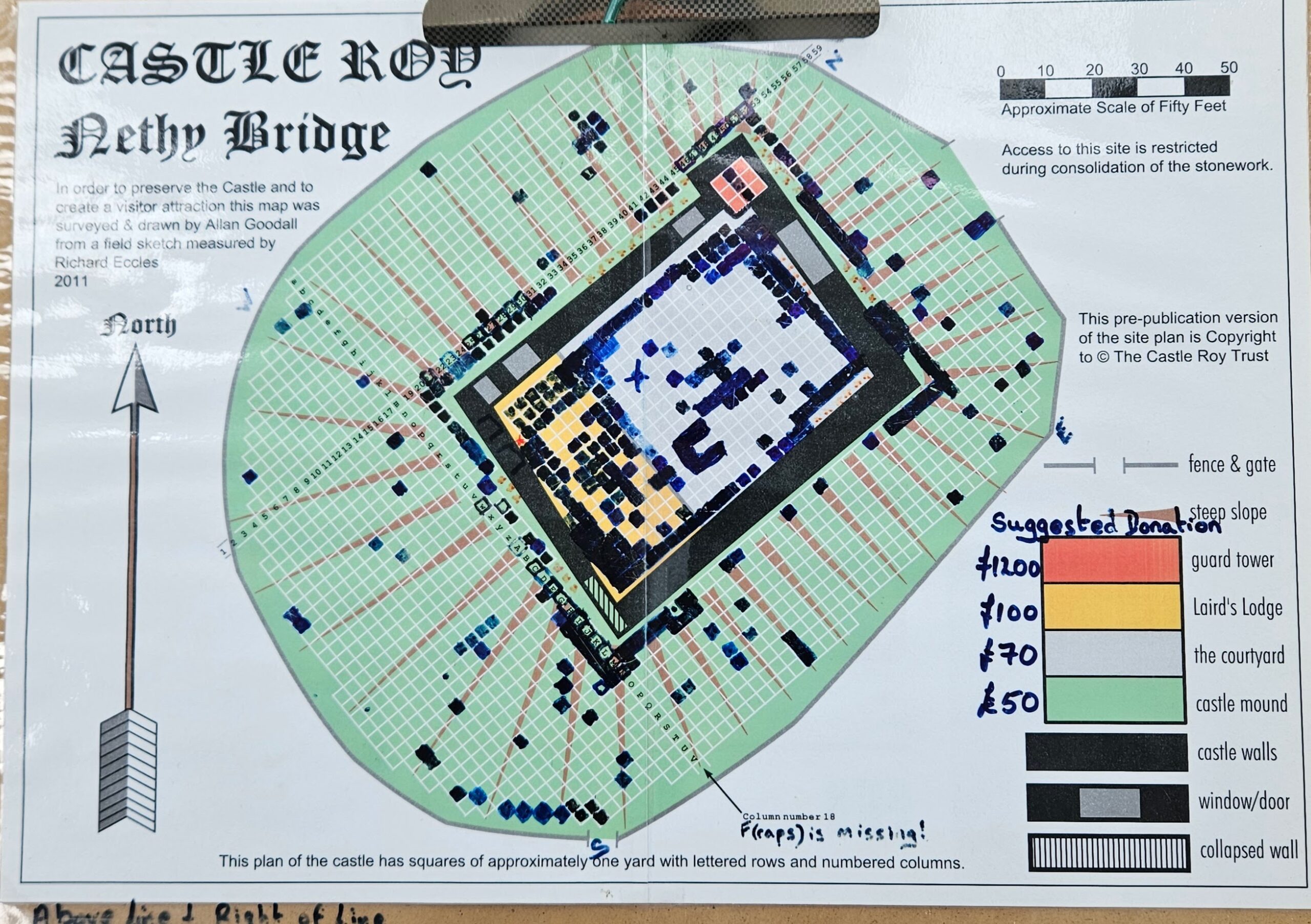
We have donation boxes at the castle. Permanent concrete-based boxes were investigated, but at more than £1,000 each they were beyond our means, so the less robust boxes have to be emptied almost every day.
Our Treasurer has also set up SumUp so visitors can donate using a QR code. Rather than simply having a sign demanding money, it gives access to the website, donations, our Square Yard scheme and our Google Photos.
We have even printed it on postcards instead of handing out business cards.
And one of our most successful ideas came from Annabelle, who suggested opening the car park to motorhomes.

We cannot provide services for them, but motorhomes are welcome to stop, and many visitors leave donations. Those small contributions add up to a surprising amount over the year.
Murdo: Guardian of Castle Roy
For many people around the world, their first introduction to Castle Roy wasn’t a medieval fortress at all.
It was a Highland cow.

Murdo was born on in June 2014 and had a very difficult beginning. He could barely stand because of an infection affecting three of his legs, which ultimately caused severe arthritis.
He was abandoned by his mother, but extraordinary care from the farm manager enabled him to survive.
When he was three years old, he came to Castle Roy and became its Guardian.


Annabelle, helped by family and professional friends, took wonderful care of him.
As Castle Roy became better known, Murdo became an attraction in his own right. Tour groups changed their routes to see him. Individual visitors came specifically because they had heard about him. People returned time and again.
The Kilted Photographer particularly loved Murdo and regularly featured him in his calendars and on social media.
By January 2024, Murdo weighed well over a ton and his poor legs were struggling.
Murdo turns ten


Hundreds of people came to Castle Roy for Murdo’s tenth birthday and sang Happy Birthday while he enjoyed his enormous coo-feed birthday cake.
Saying goodbye
In November 2024, on veterinary advice, Annabelle made the very difficult decision that Murdo would not manage another Highland winter. As she put it, it was time for him to make his journey to Rainbow Bridge with his faithful companion, Buster the sheep.

He left quite a legacy.
For many people around the world, their first introduction to Castle Roy was not a medieval fortress. It was Murdo.
People understandably ask whether there will ever be another Highland cow at Castle Roy. Sadly, the answer is no.
Modern restrictions surrounding livestock movements make it much more complicated, but there is also a very practical reason. Looking after an animal of Murdo’s size, and with his particular needs, was an enormous commitment. He even had his own physio.

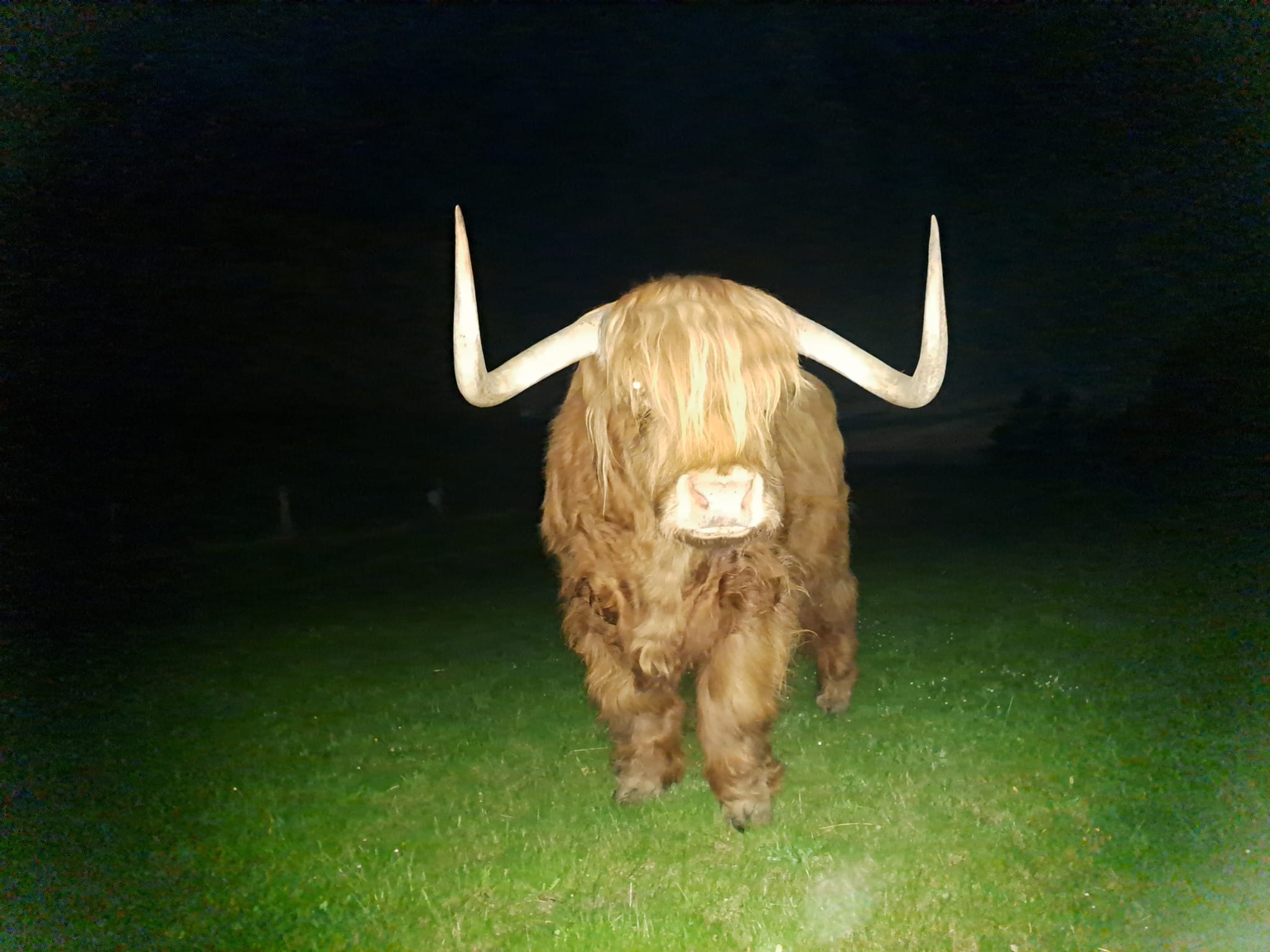
Our volunteers worked through long Highland winters when the weather could be extremely unpredictable, with limited shelter in such a small field. We simply couldn’t ask them to take that responsibility on again.
There is no poo fairy
Castle Roy has a sign reminding dog owners: “There is no poo fairy.”

Every year Murdo had to have his feet attended to, involving getting him into the crush and eventually onto his side for his annual pedicure.

On one particular occasion, Murdo apparently decided the whole procedure had become too much and let out a spectacular and extremely smelly explosion.
Unfortunately, or perhaps perfectly, the principal casualty was the sign.

“There is no poo fairy.” On that occasion, there certainly wasn’t.
The Guardian is still here

But Murdo is still at Castle Roy in a way. A small model of him, Mini Murdo, now stands safely fenced, overlooking the castle that was his home.
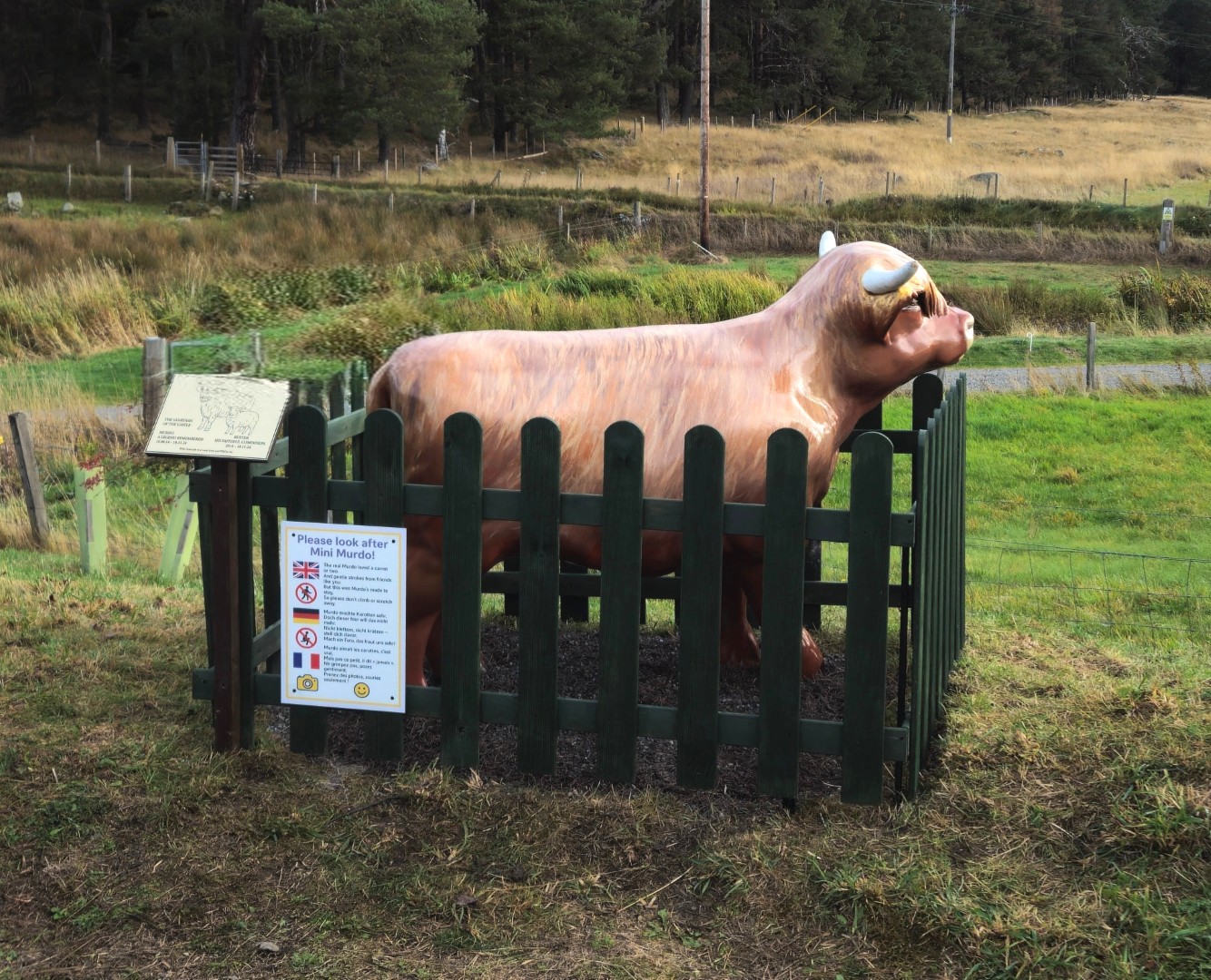
Beside him is an inscription remembering Murdo and his woolly friend Buster.
And rather wonderfully, people now come specifically to visit Mini Murdo. Some knew and loved the real Murdo and return to see where he lived.
So although there won’t be another Highland cow at Castle Roy, Murdo is still bringing people here.
Our Guardian is still there, keeping an eye on things.
Castle Roy as a Community Place
The Castle Roy Trust itself does not organise a huge number of events.
Most of our volunteers are, shall we say, no longer in the first flush of youth.
But we very much want Castle Roy to be used. So when other people want to organise suitable activities here, we try to give them as much advice and practical help as we can.

Weddings, events and one unfortunately timed storm
Castle Roy has hosted weddings, open days and small community events.

We once held a large craft fair in August and somehow managed to choose the day of a named storm. Several lightweight gazebos suffered and appeared to be leaving the courtyard!
It was one of those useful Castle Roy learning experiences.
We now know rather more about where to put gazebos.
We had also hoped at one point to hold performances, but professional performers are expensive to book, and we simply cannot afford the financial risk of relying on ticket sales to cover the cost with such unpredictable weather.
Sadly, we are not Cawdor Castle.
But we do provide guided tours on request.

These are particularly popular with our Lairds and Ladies who have acquired Square Yards at Castle Roy, many of whom come from far-flung corners of the world.
The Panoramic Picnic Point
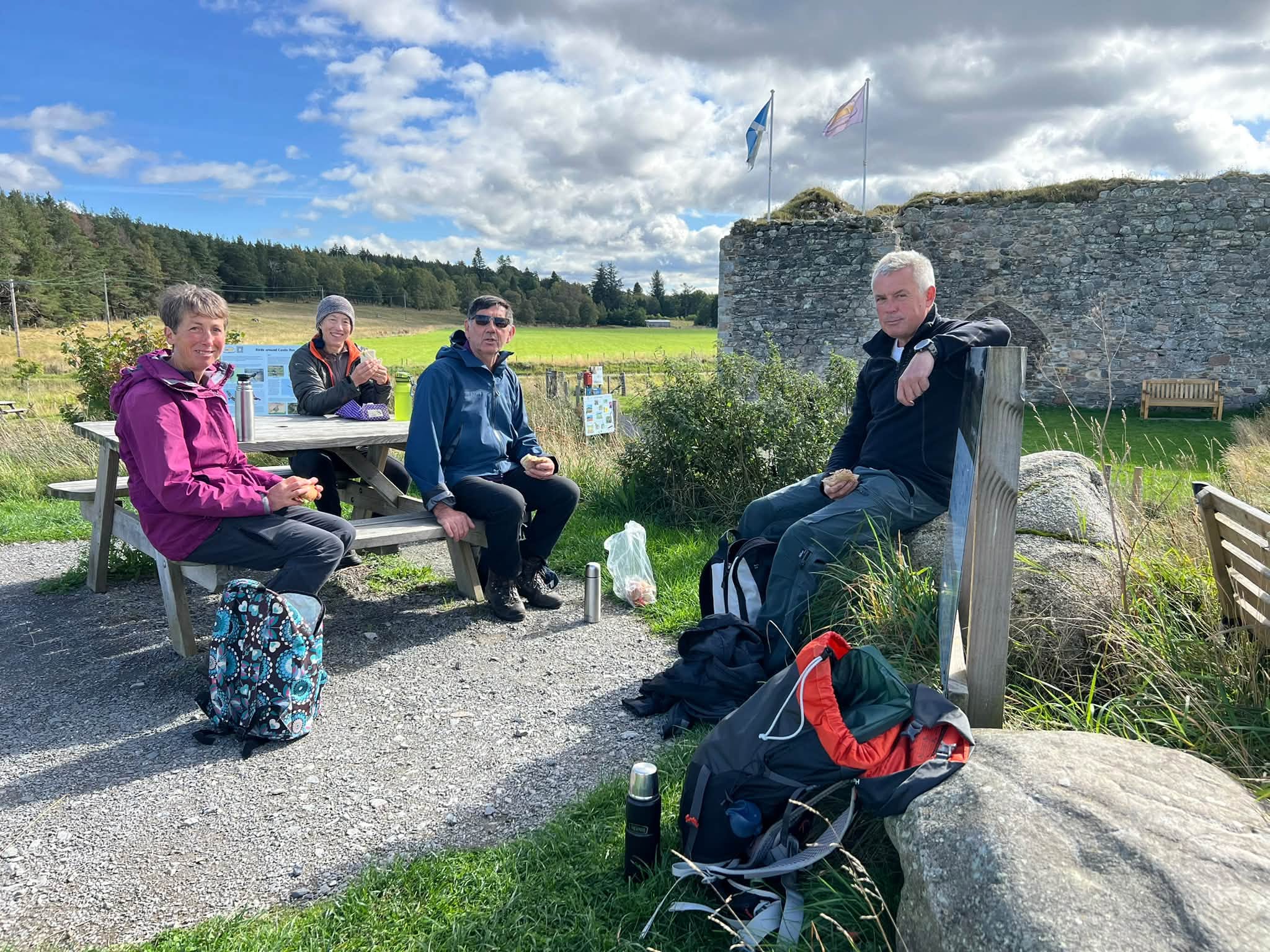
This site is also used in ways we never necessarily planned. Recently, Explorer Abernethy volunteers stopped to have lunch at our Panoramic Picnic Point.
That viewpoint exists almost by accident.
Originally there was simply a large pile of unwanted debris taken from inside the courtyard so that archaeological digs could take place.
One day, while discussing with our digger driver where on earth we could move it, two trustees jumped out of the car and told us not to touch it. They had realised it had a wonderful view.
So the unwanted pile was covered with soil and became our Panoramic Picnic Point.

Sometimes heritage management consists of knowing when not to move a pile of rubble.
The Less Glamorous Facilities
There is another side to running a visitor attraction that doesn’t tend to feature prominently in glossy heritage brochures.
Toilets.
We have a good relationship with Deveron Loos, who have supported us ever since we opened.

They even donated an old Portaloo, which we use for Open Days and small events when necessary.
But having a Portaloo is one thing. Emptying it is another.
Professional emptying can cost up to £100.
Once again, Annabelle came up trumps. After an event she can be found wearing rubber gloves up to her elbows, armed with her own system involving a black bin bag and cat litter.
There are probably very few historic sites whose fundraising strategy includes cat litter.
But it works.
And then there’s the rubbish
We have a large bin on site, but rather than pay the considerable cost of regular commercial waste collections, we take the rubbish away ourselves when necessary.
Event organisers are responsible for dealing with their own waste.
It is a simple arrangement, but it saves the Trust a significant amount in collection charges.
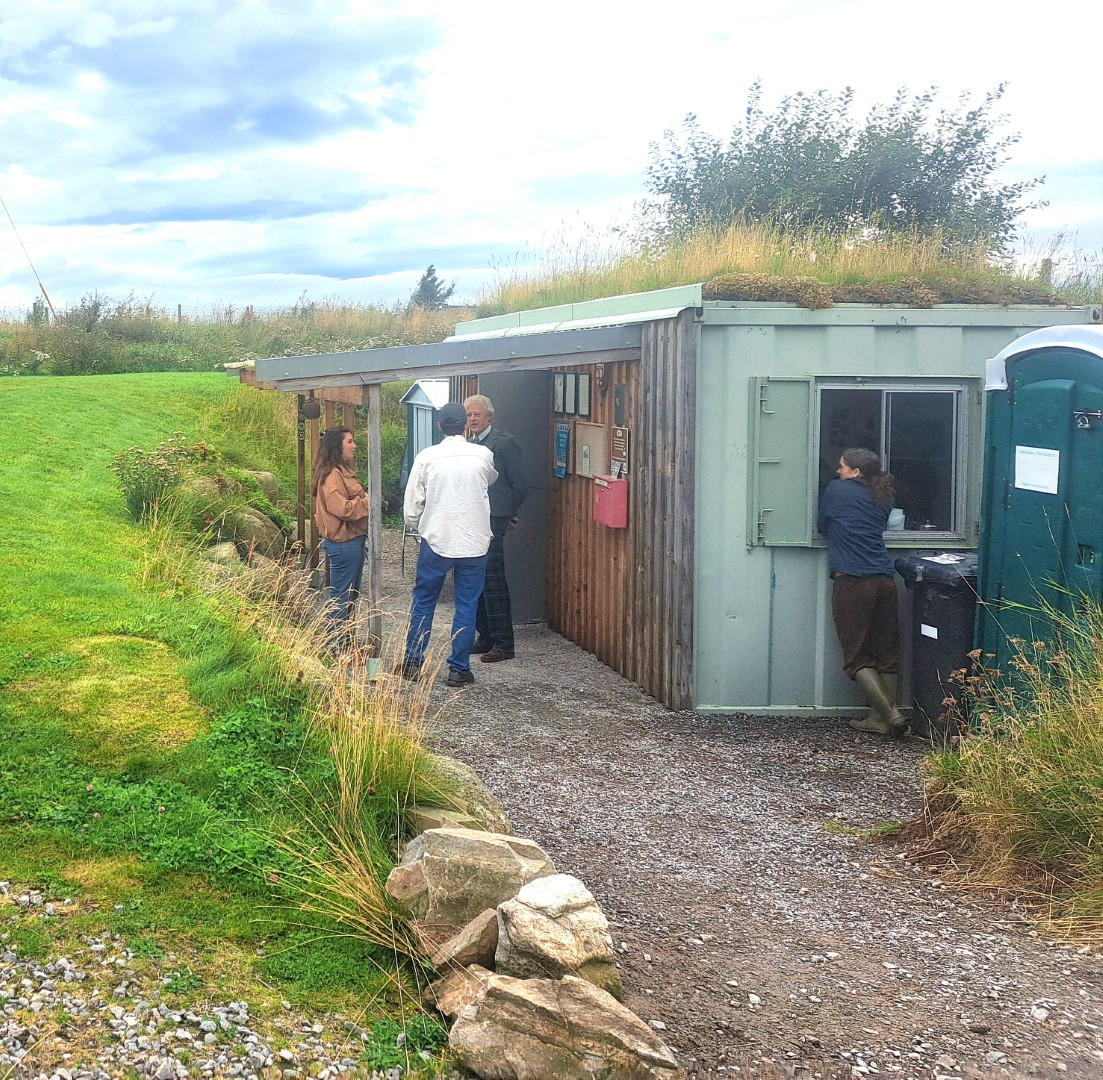
Nobody puts taking the bins home into the romantic description of looking after an ancient castle. But that is precisely the sort of small behind-the-scenes job that helps keep our running costs down.
We also have a sunken container providing secure office space and a sales window from which refreshments can be served.
None of these things is particularly glamorous.
But that really is what “behind the scenes” means.
The Pictures People See

Photography has played an enormous role in bringing Castle Roy to a wider audience.
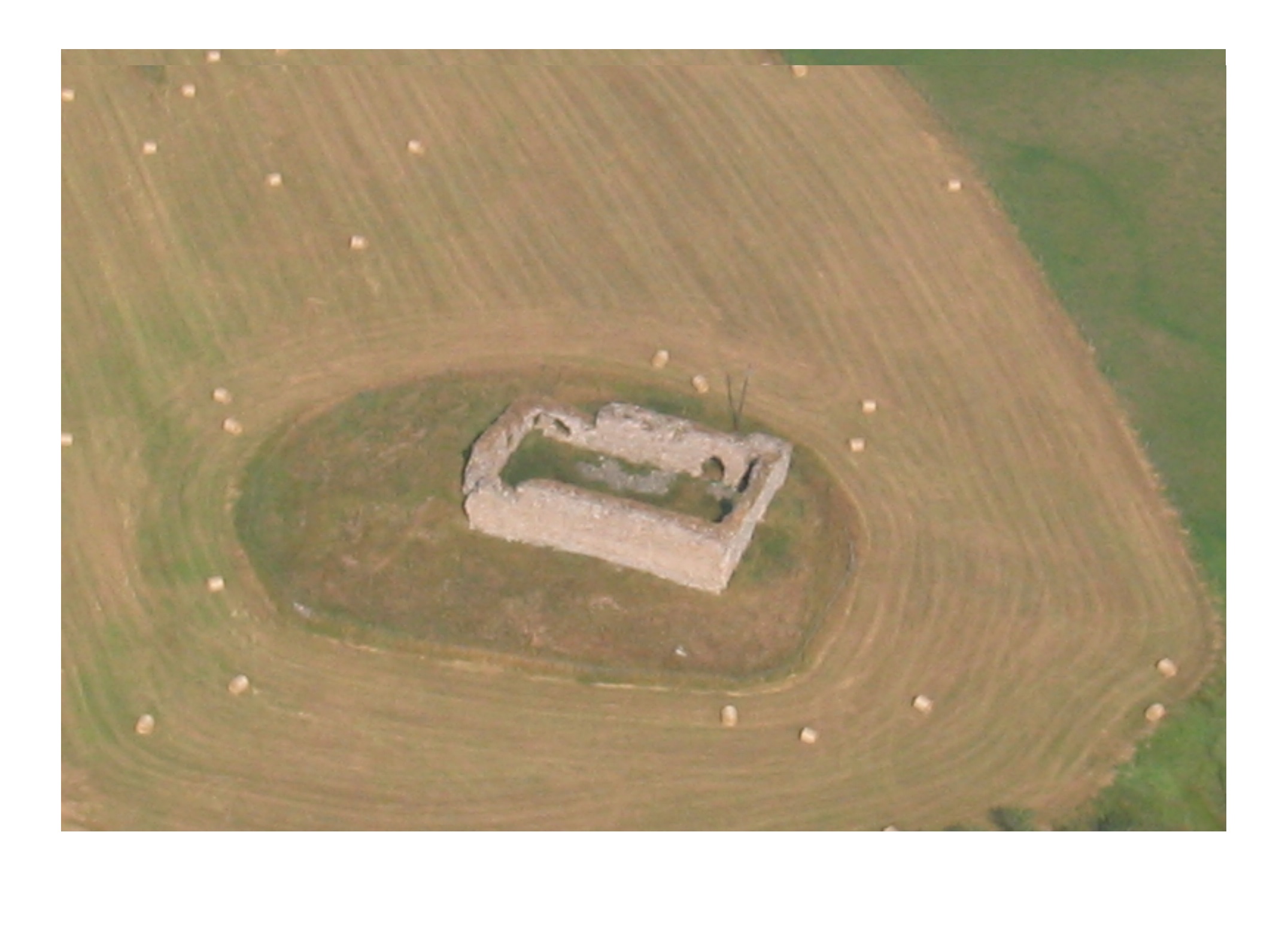
The Kilted Photographer not only photographed Murdo, but took wonderful aerial and drone photographs showing the extraordinary layout of the castle.
He also photographed our opening ceremony, when the Jacobites attempted to capture Lord Strathspey.

Images like these enable people to understand Castle Roy in a way that can be difficult from ground level.
And today, of course, visitors photograph everything: the castle, the interpretation panels, the wildflowers, the views and occasionally the things we would rather they didn’t walk through in order to get their photograph.
Castle Roy’s 21st-century presence

Social media and Google reviews have become part of looking after a historic site too.
We respond to every Google review. Even an occasional bad review gives us an opportunity to explain what Castle Roy actually is, why it looks the way it does and why this apparently simple enclosure of stone walls is historically important.
And then there is the website.
Creating a website is one thing. Keeping it up to date is quite another.
The website has become an important part of how people discover Castle Roy before they ever set foot on the site, particularly those visitors from much further afield.

So looking after Castle Roy now involves maintaining not only an 800-year-old fortress, but its 21st-century presence as well.
We are not simply conserving the physical castle. We are continually interpreting it.
What Really Goes On Behind the Scenes?

They don’t see…
The wall inspections. The volunteers removing saplings. The mowing and strimming. The funding applications. The donation boxes being emptied. Somebody cleaning a Portaloo. Somebody taking the rubbish home.
They don’t see us wondering why 80,000 people apparently visited in June.
They don’t see the sheep causing yet another notice to be made.
They don’t see a young mason learning traditional skills.
They don’t see schoolchildren, apprentices and university students learning from a building constructed more than eight centuries ago.
And they don’t see the trustees, volunteers, local businesses, specialist groups, photographers, tradespeople, funders and members of the community who contribute in dozens of different ways.
Most importantly, they don’t see the worry that comes with knowing that this extraordinary structure has survived for something approaching 900 years and that, for a very short period in its history, we are responsible for it.
That is perhaps the most important thing I have learned since standing on the mound with Stuart Black in 1994.
The Trust does not really own Castle Roy.

Our job is to look after Castle Roy, to make it accessible, to help people understand and enjoy it, and eventually to pass it on to the people who come after us.

And if we can do all that while persuading rather more of those 2,000 visitors a month to put a pound in the donation box… that would help too.

Castle Roy
Nearly 900 years old. And still in our care.